Research
Elevating Learning Environments through Biophilic and Student-Centered Designs: A Case Study of Bethel-Hanberry Elementary School
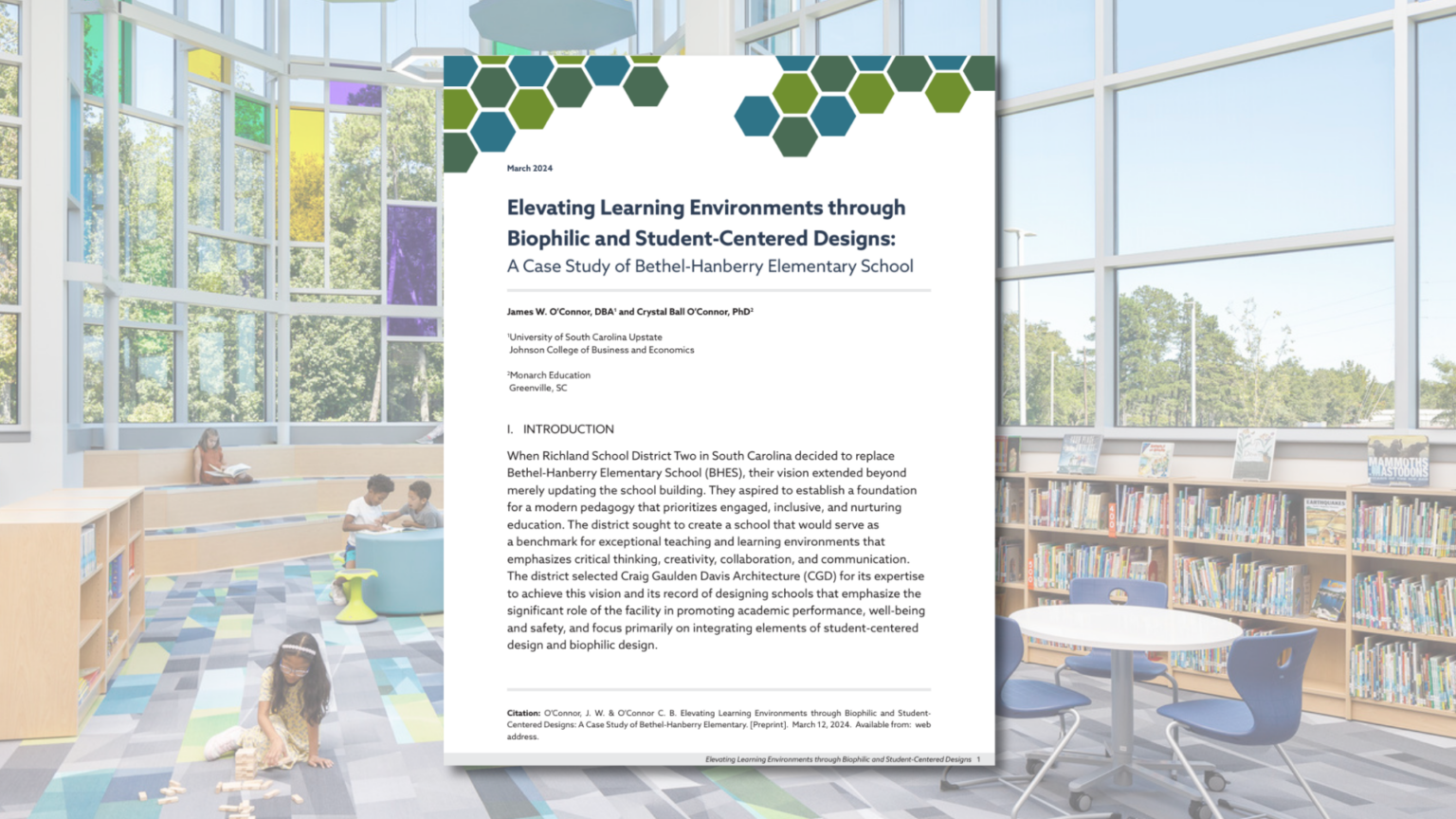
The true measure of a school is how it supports the students, educators, and communities who use it every day. Elevating Learning Environments through Biophilic and Student-Centered Designs: A Case Study of Bethel-Hanberry Elementary School takes an in-depth look at how research-driven educational design shapes the learning experience through a comprehensive post-occupancy assessment. The study focuses on Bethel-Hanberry Elementary School in Richland School District Two, South Carolina, a project originally designed by Craig Gaulden Davis, which joined PBK in 2025.
Authored by James W. O’Connor, DBA, and Crystal Ball O’Connor, PhD, the case study explores how biophilic and student-centered design strategies influence the experiences of students, educators, and families after the school has been occupied. Researchers assessed the building through surveys, interviews, classroom observations, and analysis of school performance data, providing a comprehensive evaluation of how the facility supports teaching and learning.
The findings highlight the benefits of designing schools that foster safety, well-being, belonging, and student engagement. Survey responses showed that students, teachers, parents, and administrators overwhelmingly viewed the new learning environment as safer, more welcoming, and better equipped to support a variety of learning styles. Participants also identified abundant natural light, views of nature, flexible collaboration spaces, and thoughtfully designed areas for both group work and quiet reflection as meaningful contributors to the overall learning experience.
Beyond evaluating a single project, the case study demonstrates the value of measuring building performance after occupancy. By gathering feedback directly from the people who use a school every day, research can help validate successful design strategies and inform future educational environments that better support student achievement, well-being, and community connection.
Read the full case study below to explore the research methodology, design strategies, and assessment findings in greater detail.