Research
Biophilic Design and Its Impact On Student Success
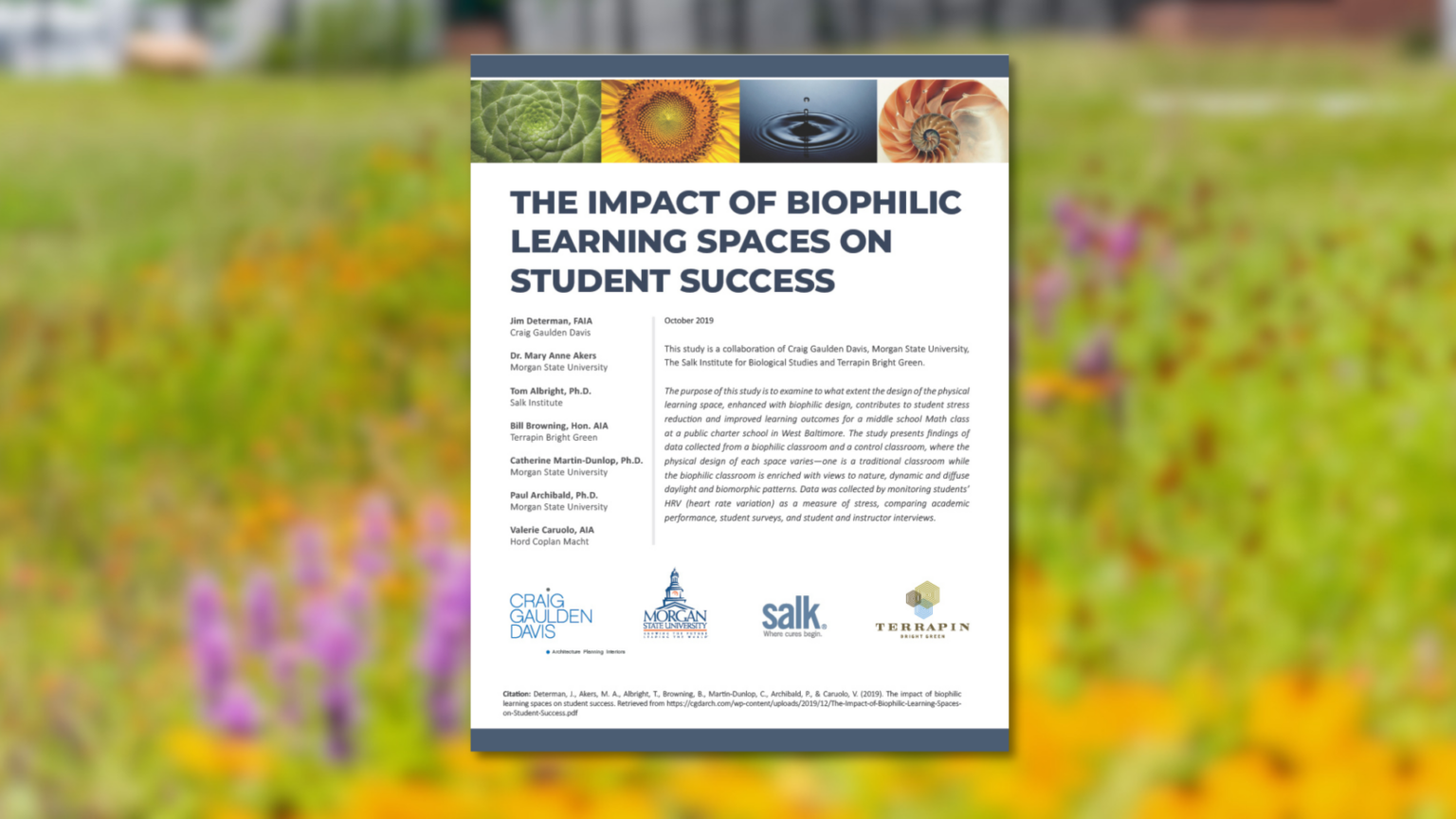
At PBK, our approach to designing learning environments is grounded in research that demonstrates the profound impact the built environment can have on student success. The Impact of Biophilic Learning Spaces on Student Success, a research study co-authored by Jim Determan, FAIA, explores how incorporating biophilic design strategies into educational spaces can positively influence student well-being and academic performance. The study was originally published while Jim was with Craig Gaulden Davis, which joined PBK in 2025.
Originally published in collaboration with researchers from Morgan State University, the Salk Institute for Biological Studies, Terrapin Bright Green, and Hord Coplan Macht, the study explores how incorporating biophilic design strategies into educational environments can positively influence student well-being and academic performance.
The research compared a traditional middle school math classroom with a classroom intentionally designed to incorporate biophilic elements, including access to natural views, dynamic daylight, and biomorphic patterns. Researchers evaluated the learning environments using a combination of physiological stress measurements, student and teacher surveys, classroom observations, interviews, and academic performance data.
The findings demonstrated meaningful differences between the two environments. Students in the biophilic classroom reported lower stress levels, greater engagement, and more positive perceptions of their learning environment. The study also found improved math performance among students learning in the biophilic space, reinforcing the connection between the built environment and student success.
As educators and designers continue to prioritize student wellness alongside academic achievement, this research offers valuable insight into how intentional, human-centered design can create healthier, more effective learning environments. It also reflects PBK’s longstanding commitment to evidence-based design and the importance of research in advancing the future of education.
Read the full research paper below to explore the methodology, findings, and implications for the design of tomorrow’s learning spaces.